custom in japanese food service: Tradition, Etiquette, and Modern Dining
custom in japanese food service cuisine is admired worldwide not only for its flavors but also for the values and traditions behind every meal. Dining in Japan is a cultural experience shaped by centuries of etiquette, hospitality, and social harmony. This article explores how food service customs influence behavior, expectations, and modern dining experiences, offering insight for travelers, food professionals, and enthusiasts alike.
The Cultural Foundation of Japanese Dining
At the heart of Japanese cuisine lies a deep respect for balance, nature, and community. The idea of custom in japanese food service is closely tied to social values such as respect for others, cleanliness, and mindfulness. Meals are not rushed; instead, they are seen as moments to appreciate ingredients, effort, and company.
Traditional dining often begins with a polite greeting like “itadakimasu,” expressing gratitude before eating. At the end of the meal, “gochisōsama deshita” acknowledges the work of everyone involved, from farmers to chefs. These expressions reflect a broader philosophy where food service is a shared cultural ritual rather than a simple transaction.
Traditional Etiquette in Food Service Settings

Dining Manners at Restaurants and Homes
In both formal restaurants and private homes, etiquette plays a central role. Removing shoes before entering certain dining spaces, using chopsticks properly, and avoiding loud behavior are all part of everyday expectations. These practices reinforce the importance of harmony, or “wa,” in social interactions.
The custom in japanese food service also includes how dishes are served. Meals often arrive in a specific order, and presentation is treated as an art form. Seasonal elements, colors, and textures are carefully considered, creating a visual experience that complements taste.
Respect Toward Staff and Chefs
Unlike tipping cultures elsewhere, tipping is generally not practiced in Japan. Excellent service is considered standard, and professionalism is a point of pride. Customers show respect through polite language and patience, while staff demonstrate attentiveness without being intrusive. This mutual respect strengthens trust between diners and service providers.
Omotenashi: The Spirit of Hospitality
Omotenashi is a uniquely Japanese concept often translated as wholehearted hospitality. It goes beyond customer service, emphasizing anticipation of needs without expecting anything in return. In food service, this means staff carefully observe guests and respond intuitively, whether by refilling tea or adjusting seating for comfort.
This philosophy is a defining element of custom in japanese food service, shaping how restaurants operate at every level. From luxury kaiseki dining to small neighborhood eateries, omotenashi ensures that guests feel genuinely cared for. The experience feels personal, sincere, and deeply human.
Modern Adaptations in Japanese Food Service
Blending Tradition with Global Influence
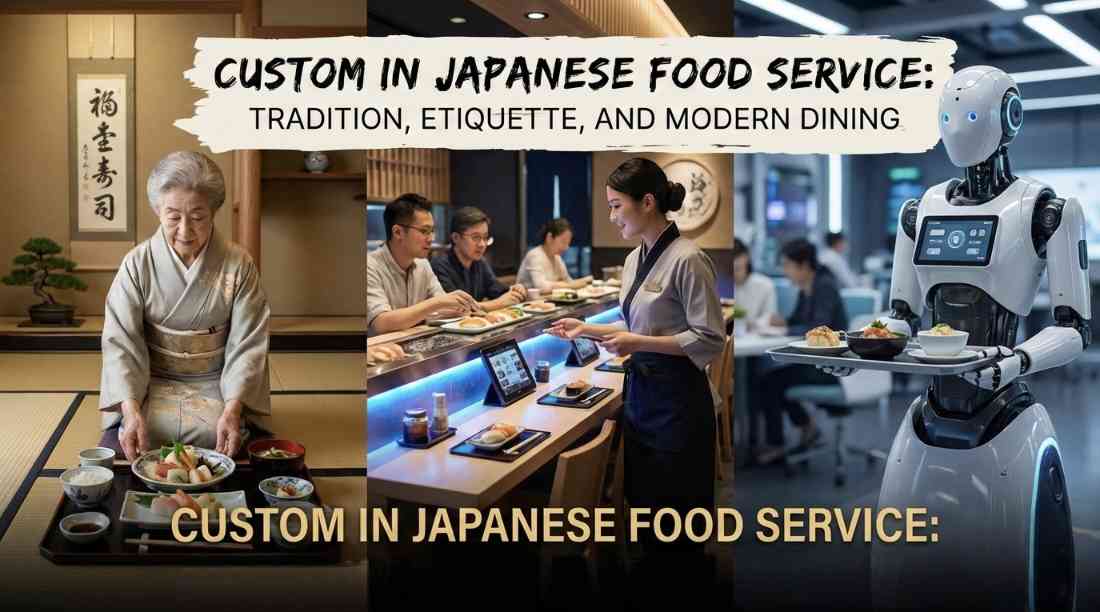
While tradition remains strong, modern Japanese food service has evolved. Urban restaurants now blend classic customs with international trends, such as fusion menus or casual dining formats. Yet even in these contemporary settings, core values like politeness, cleanliness, and attention to detail remain intact.
The custom in japanese food service has adapted to meet the expectations of global diners without losing its cultural identity. English menus, dietary accommodations, and technology-driven ordering systems are now common, especially in tourist-friendly areas.
Technology and Efficiency
Automation has also found its place in modern dining. Conveyor belt sushi, tablet ordering, and even robot servers are increasingly popular. Despite these innovations, the human element of service is preserved. Technology is used to enhance efficiency, not replace the cultural warmth that defines Japanese hospitality.
Why These Customs Matter to Global Diners

Understanding Japanese food service customs enhances the dining experience and helps visitors avoid unintentional disrespect. Simple actions, such as saying thank you properly or following seating guidance, show appreciation for local culture.
For international restaurateurs, learning from custom in japanese food service can inspire better service models. Emphasizing respect, consistency, and guest awareness can improve customer satisfaction worldwide. These customs demonstrate that exceptional service is built on empathy and cultural awareness.
FAQ’s
Why is tipping not common in Japan?
Service excellence is considered a professional standard, not something that requires extra payment.
Is it rude to talk loudly while dining?
Yes, speaking quietly is preferred to maintain a calm atmosphere for everyone.
Are chopstick rules really important?
Yes, proper chopstick use shows respect for tradition and fellow diners.
Can foreigners make mistakes without offense?
Most staff are understanding, especially when guests show genuine effort and politeness.
Conclusion
Japanese food service customs offer valuable lessons about respect, mindfulness, and hospitality. Rooted in tradition yet adaptable to modern life, these practices create meaningful dining experiences that go beyond food alone. By understanding and appreciating these customs, diners and professionals alike can connect more deeply with Japanese culture and carry its principles into their own culinary journeys.