
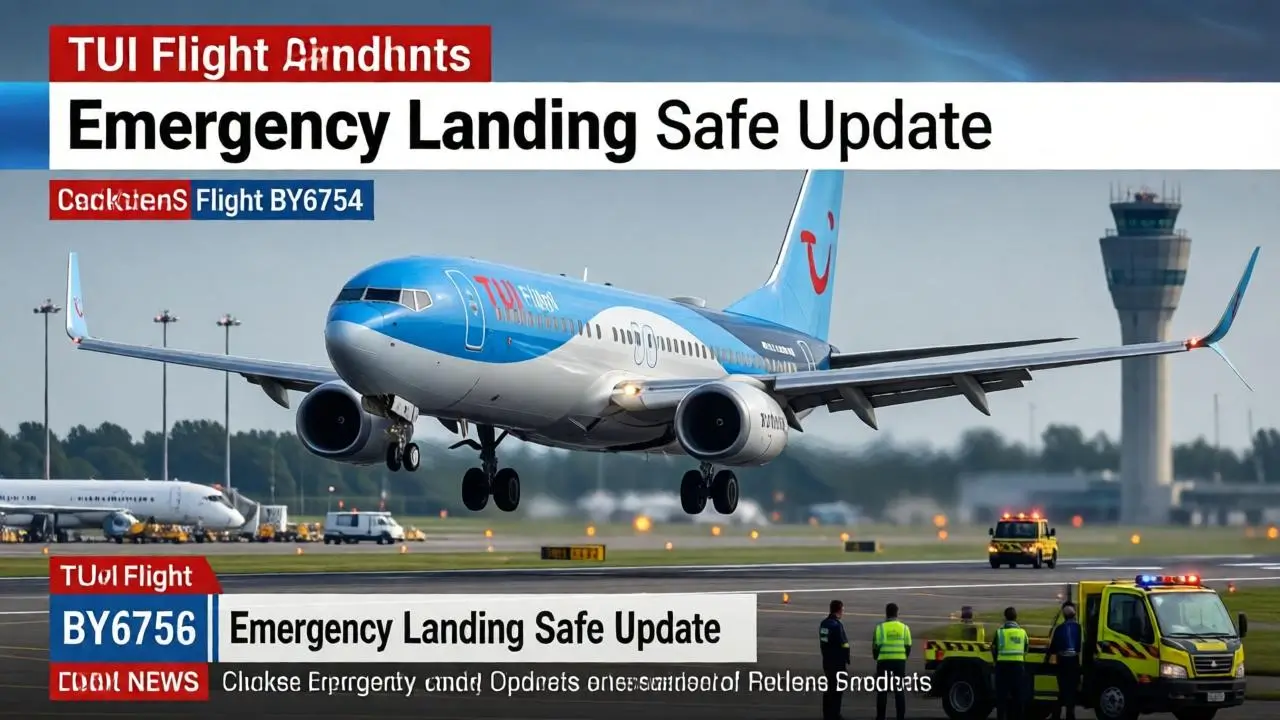
TUI Flight BY6754 Emergency Landing Safe Update
Air travel is generally considered one of the safest modes of transportation in the modern world, yet situations sometimes arise that require pilots to take immediate and controlled safety actions. One such situation that has drawn attention is the TUI flight BY6754 emergency landing. Whenever an aircraft is forced to land earlier than planned due to unexpected circumstances, it naturally raises concern among passengers and the public.
Understanding what actually happens in such situations is important because emergency landings are not necessarily signs of disaster. In most cases, they are precautionary steps taken to ensure the safety of everyone on board. This article explores the topic in depth, including possible reasons behind emergency landings, passenger experiences, airline safety procedures, and the broader aviation safety system that helps prevent serious incidents.
Understanding the Concept of an Emergency Landing
An emergency landing refers to a situation where an aircraft must land at an airport or suitable location before reaching its intended destination due to technical, medical, or operational reasons. It is a controlled decision made by the flight crew after evaluating the condition of the aircraft and the safety of passengers.
In modern aviation, pilots are trained extensively to handle such situations. Aircraft systems are also designed with multiple layers of redundancy, meaning that even if one system fails, others can support safe operation.
The TUI flight BY6754 emergency landing is an example that reflects how airlines prioritize safety over schedule. Instead of continuing a potentially risky journey, the flight crew opts for a precautionary landing.
Context Around TUI Flight BY6754 Emergency Landing
When discussing a specific flight such as TUI flight BY6754 emergency landing, it is important to focus on the general understanding of such events rather than assuming unverified technical details. Flights operate under strict regulations, and any unexpected landing usually involves careful decision-making by trained professionals.
In situations like this, passengers may experience sudden changes in altitude, communication from the cockpit, or instructions from cabin crew. While this may feel alarming, it is typically part of a structured safety response.
Airlines such as TUI operate under international aviation standards, meaning every flight is monitored closely from departure to arrival. If something unusual is detected—whether mechanical, environmental, or medical—the crew follows predefined emergency protocols.
Common Reasons Behind Emergency Landings
Emergency landings can occur for several reasons, and each situation is treated with urgency and precision. In the case of TUI flight BY6754 emergency landing, like any other similar aviation event, multiple factors could potentially lead to such a decision.
One of the most common reasons is a technical issue. Aircraft are complex machines with thousands of components, and although failures are rare, they can still occur. Even minor irregularities may prompt a precautionary landing.
Weather conditions also play a significant role. Severe turbulence, storms, or unexpected atmospheric changes can force pilots to divert or land early to ensure passenger safety.
Medical emergencies are another frequent cause. If a passenger or crew member experiences a serious health issue, the aircraft may land at the nearest suitable airport to provide immediate medical assistance.
Cabin pressure irregularities, engine warnings, or navigation system alerts can also contribute to such decisions. In every case, the priority remains the same: ensuring the safety of everyone onboard.
Passenger Experience During an Emergency Landing
For passengers, experiencing an emergency landing can be stressful, especially if they are unaware of the technical background behind it. The sudden change in flight behavior, announcements from the crew, and possible diversion to another airport may create confusion.
However, cabin crew members are trained to handle these situations calmly. Their role is to maintain order, provide clear instructions, and reassure passengers throughout the process.
In the case of TUI flight BY6754 emergency landing, passengers would typically be informed as soon as the situation is assessed. While emotions may run high, most passengers later understand that the decision was made purely for safety reasons.
It is also important to note that emergency landings are executed in a controlled manner. Pilots communicate with air traffic control, select the nearest safe airport, and follow strict landing procedures to ensure stability and safety.
Airline Safety Protocols and Training
Modern airlines operate under extremely strict safety regulations. Pilots undergo continuous training, including simulator-based emergency scenarios that replicate real-life situations such as engine failure, cabin pressure loss, or navigation issues.
Cabin crew members also receive extensive training in emergency response, including evacuation procedures and passenger management.
For flights like TUI flight BY6754 emergency landing, multiple layers of safety systems are activated simultaneously. Ground control teams, maintenance engineers, and operational staff all coordinate to support the flight crew.
This structured approach ensures that even unexpected situations are handled efficiently and professionally.
What Happens After an Emergency Landing?
Once an aircraft completes an emergency landing, a detailed inspection process begins. Engineers examine the aircraft to identify any technical faults or irregularities that may have caused the situation.
The flight crew provides reports, and aviation authorities may also conduct independent assessments depending on the severity of the event.
Passengers are usually assisted by airline staff, especially if alternative travel arrangements are required. In most cases, flights are resumed after safety clearance or replaced with another aircraft.
In incidents like TUI flight BY6754 emergency landing, the focus after landing is always on investigation, resolution, and prevention of future occurrences.
Importance of Aviation Safety Systems
Aviation safety is built on continuous improvement. Every incident, no matter how small, contributes to better understanding and stronger safety measures in the future.
Emergency landings are not considered failures; they are considered successful safety interventions. The fact that a safe landing is achieved even during unexpected situations reflects the strength of modern aviation systems.
The aviation industry relies heavily on communication, technology, and human expertise working together. This combination ensures that risks are minimized at every stage of a flight.
Psychological Impact on Passengers
Even though emergency landings are generally safe, they can have a psychological impact on passengers. Fear, anxiety, and uncertainty are natural reactions in such moments.
Airlines often provide reassurance and support after landing. In some cases, passengers may require time to recover emotionally before continuing their journey.
Understanding that such events are precautionary rather than catastrophic helps reduce long-term anxiety related to air travel.
Broader Perspective on Air Travel Safety
Air travel continues to be one of the safest forms of transportation globally. Millions of flights operate successfully every year without incident.
Events like TUI flight BY6754 emergency landing are rare and are handled with extreme professionalism. They highlight the preparedness of aviation systems rather than weaknesses.
Continuous advancements in aircraft technology, pilot training, and safety monitoring further reduce the likelihood of serious issues.
FAQs
1. What does TUI flight BY6754 emergency landing mean?
It refers to a situation where the TUI flight BY6754 had to land earlier than scheduled due to safety-related reasons, handled under standard aviation procedures.
2. Is an emergency landing dangerous for passengers?
Not necessarily. Emergency landings are precautionary actions taken to ensure safety, and most are completed without harm to passengers.
3. What causes a flight to make an emergency landing?
Common reasons include technical issues, weather conditions, medical emergencies, or system alerts detected during flight.
4. What should passengers do during an emergency landing?
Passengers should remain calm, follow crew instructions, and stay seated unless advised otherwise by cabin staff.
5. Do airlines investigate emergency landings?
Yes, airlines and aviation authorities conduct detailed investigations to understand the cause and improve future safety.
6. How common are emergency landings?
They are relatively rare compared to the total number of flights operated worldwide and are usually handled without serious consequences.
Final Thoughts
The TUI flight BY6754 emergency landing serves as an example of how aviation safety systems are designed to respond quickly and effectively to unexpected situations. While the term “emergency landing” may sound concerning, in reality it reflects caution, preparedness, and professional decision-making.
Modern aviation prioritizes passenger safety above all else, and every emergency procedure is built around this principle. Understanding how these systems work helps build confidence in air travel and highlights the strength of the global aviation industry.
For More Visits: Veganovies